Impeachment Process and Historical Use
Process
Wary of unchecked centralized power and mindful of the fragility of the new Republic, the Framers inserted a safeguard into the Constitution: impeachment. Impeachment serves as a critical tool in the system of checks and balances established by the Constitution. Impeachment is the power of Congress to rebuke and indict a public official for illegal or unbecoming behavior.
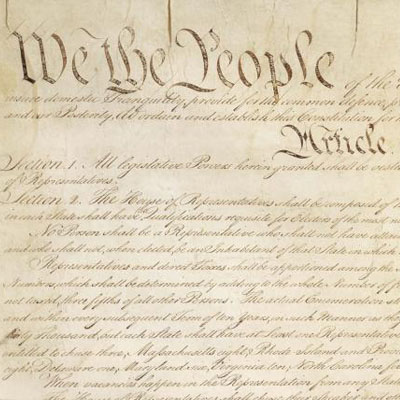
Article II delineates who may be impeached, stating “The President, Vice President and all civil Officers of the United States, shall be removed from Office on Impeachment for, and Conviction of, Treason, Bribery, or other high Crimes and Misdemeanors” (“The Constitution…,” 2019, p.8). The vague nature of this statement leaves room for interpretation as to what constitutes a high crime and misdemeanor, though Alexander Hamilton noted this encompassed “…the abuse or violation of some public trust…[and] injuries done immediately to society itself” (Hamilton, Madison, and Jay, 2015, p.319).
Article I establishes the role of each house of Congress in the impeachment process. The House of Representatives retains the power of impeachment (“The Constitution…,” 2019, p.2). Precedent has established additional rules, processes, and parameters for impeachment. Proceedings are initiated through the passing of a bill or resolution authorizing an inquiry (“Impeachment,” n.d., p.1). The House conducts information gathering, either through a House Committee or independent counsel, to determine if there is evidence to move forward with an indictment (“Impeachment,” 2017, p.2). Impeachment requires a simple majority vote in the House of Representatives (“Impeachment,” n.d., p.1).
If the House impeaches, then the Senate holds the power to try an impeachment, with the Chief Justice of the Supreme Court presiding over the Senate trial where Senators serve as the jury (“The Constitution…,” 2019, p.2). The House selects managers to serve as attorneys in the Senate trial (“Impeachment,” n.d., p.1). A supermajority vote in the Senate is necessary for conviction and removal of an official from office (“Impeachment,” 2017, p.2).
Historical Use
The impeachment of an official has been a rare occurrence through the history of the United States. Three presidents have been impeached: Andrew Johnson (1868), Bill Clinton (1998), and Donald Trump (2019). None have been removed from office (“List of…,” n.d., p.1-5).
The Impeachment of President Donald Trump
Background
An August 2019 whistleblower complaint alleged that President Trump ordered military aid withheld from Ukraine in exchange for a promise from Ukrainian President Volodymyr Zelensky to conduct an investigation into Former Vice President Joe Biden and his role in the firing of a previous Ukrainian prosecutor as well as his son, Hunter Biden, in Ukrainian Burisma Holdings. Mr. Biden is a current political rival for the U.S. Presidency in the upcoming 2020 election (“The Whistleblower…,” 2019, p.1-13).
Process
In September 2019, the House announced a formal inquiry into the matter. Following a formal vote prior to the inquiry, the House Intelligence Committee spearheaded a series of private and public testimonies from multiple witnesses. It sent its findings to the House Judiciary Committee, which concluded that the evidence was sufficient and drafted articles of impeachment against President Trump (“How the…,” 2019, p.1-2). The process was not without controversy, as the President and his Republican allies in Congress and the White House questioned variances in procedure, alleged partisanship, and blocked subpoenaed witnesses and materials from coming forward (“Fact Check…,”2019, p.2-7).
Outcome
On December 18, 2019, the House of Representatives voted – along party lines – to impeach President Donald Trump on two articles: abuse of power and obstruction of Congress (“How the…,” 2019, p.2).
Latest Developments
Upcoming Senate Trial
The Republican-led Senate has indicated that it will follow the White House lead on how to conduct the trial. The Democratic-led House is considering withholding the articles as leverage for a fair process and the ability to call witnesses (“Pelosi Says…,” 2019, p.1-3).
Some Senators have indicated an unwillingness to be fair jurors, leading to a question over whether or not Senators will be able to faithfully execute their oath to do impartial justice (“Senators…,” 2020, p.1-3).
New information continues to come to light due to ongoing lawsuits through the Freedom of Information Act, leading to speculation that the House may consider bringing new articles of impeachment against President Trump (“New Documents,” 2020, p.1-4).
The Impact of Impeachment
Does impeachment matter in the minutiae of everyday life? When asked by a crowd what form of government the Constitutional Convention delegates created, Benjamin Franklin responded “A republic, if you can keep it” (“Perspectives…,” n.d., p.3). Impeachment is one way we preserve our Republic. The successful impartial, nonpartisan use of impeachment to rebuke an official for wrongdoing is an indication of the health of the Republic. Impeachment protects our foundations by preserving the rule of law; ensuring that no one is above nor immune to it. If our government allows unchecked power to grow, gridlock and partisanship follow, potentially leading to a paralysis that prevents the government from providing for we the people. Impeachment, as the Framers intended, is perhaps the most important safeguard to ensuring that young people inherit Franklin’s Republic when they come of age to govern.
References
Beeman, Richard R. (n.d.). Perspectives on the Constitution: A Republic, If You Can Keep It. National Constitution Center. Retrieved from https://constitutioncenter.org/learn/educational-resources/historical-documents/perspectives-on-the-constitution-a-republic-if-you-can-keep-it.
Granoff, Jonathan and Prigoff, Michael L. (2020). Senators, keep your oaths (‘so help you God’). The Hill. Retrieved from https://thehill.com/opinion/white-house/476567-senators-keep-your-oaths-so-help-you-god.
Grisales, Claudia and Walsh, Deirdre. (2019). Pelosi Says She Plans to Send Articles of Impeachment to Senate. NPR. Retrieved from https://www.npr.org/2019/12/18/789062780/house-democrats-weigh-a-move-to-delay-senate-impeachment-trial.
Hamilton, Madison, and Jay. (2015). The Federalist Papers: A Collection of Essays Written in Favour of the New Constitution as Agreed Upon by the Federal Convention. Dublin, OH: Coventry House Publishing.
History, Art & Archives, U.S. House of Representatives. (n.d.). Impeachment. U.S. House of Representatives. Retrieved from https://history.house.gov/Institution/Origins-Development/Impeachment/.
History, Art & Archives, U.S. House of Representatives. (n.d.). List of Individuals Impeached by the House of Representatives. U.S. House of Representatives. Retrieved from https://history.house.gov/ Institution/Impeachment/Impeachment-List/.
History.com Editors. (2017). Impeachment. History.com. Retrieved from https://www.history.com/topics/us-government/impeachment-in-us-history.
Kiely, Eugene, Robertson, L., and Gore, D. (2019). The Whistleblower Complaint Timeline. Factcheck.org. Retrieved from https://www.factcheck.org/2019/09/the-whistleblower-complaint-timeline/.
National Archives. (2019). The Constitution of the United States: A Transcript. National Archives. Retrieved from https://www.archives.gov/founding-docs/constitution-transcript.
Naylor, Brian. (2019). Fact Check: White House Legal Argurment Against Impeachment Inquiry. NPR. Retrieved from https://www.npr.org/2019/10/09/768540896/who-sets-the-rules-when-is-it-real-and-other-big-questions-on-impeachmentfbclid=IwAR38hd724815H5ZXe1rQUVJzKx2KsGOnFzl7tcJgvMEINGKSMZ90lO51ECE.
Smith, Jeffery R. (2020). New Documents Reveal Pentagon Anger Over Holdup in Ukraine Aid. The Center for Public Integrity. Retrieved from https://publicintegrity.org/national-security/ukraine-docs/new-documents-reveal-pentagon-anger-over-holdup-in-ukraine-aid/.
Steckelberg, Aaron, Stevens, H., Berkowitz, B., Meko, T., and Rabinowitz, K. (2019). How the impeachment process works. The Washington Post. Retrieved from https://www.washingtonpost.com/politics/2019/09/25/how-impeachment-works/?arc404=true.
 within and without